Thursday, May 6, 2010

1


Theme 1: The early electronic media led to the idea that the audience would be an undifferentiated mass. Trace thinking about audience from mass to "the long tail".Include discussion( And illustration) of how demographics and media genres created media audiences ,and the ways in which social media can create, in theory , an audience of 1 for many media experiences. In early media the audience was viewed as a mass that could be manipulated. But as technology has changed, so has that image. The mass audience works for media business and advertisers who need this theory for marketing and publishing and trying to reach the largest amount of people possible. The dis-agregated audience was the audience that was in all different locations- some at work, some int he suburbs, some in the isolated countryside. This concept was important to advertisers who were trying to sell to the audience. In the 1920's and 1930's the radio was better than the newspaper because the audience didn't need to be literate, didn't need to pay for usage, and they could use celebrity voices to advertise their products. Then the audience became a commodity that could be bought and between networks and advertisers. The audience is separated into demographics in which statistics are used to describe a population of viewers and/or listeners. Now in this digital age, the audience refers to more than just radio and newspaper, and includes the internet and television, as well as any other media that can measure its users. In the concept of Demassification the audience is separated by the long-tail effect. Websites such as Netflix, which rents out movies to users, uses an application to suggest movies to users based on previous rentals. In doing this, users can be separated from the mass audience based on their taste and suggested less mainstream movies and more obscure titles/writers/themes until they develop a very specified taste and become and audience of one. Then there are websites that works to separate users in a negative way. There are niches for people with eating disorders, suicidal tendencies, or those who commit hate crimes, etc. where website users encourage each others damaging behavior. This polarization is protected by the first amendment freedom of speech and can sometimes gain a rather large audience with a common goal. More commonly though, the audience masses together for a good cause such as raising awareness and support for autistic children or a breast cancer walk. The audience can diverge or converge, for good or for bad, and can also be manipulated by advertisers or site hosts. Measuring the audience has proven tricky but with the assistance of Nielson and the internet which can actually measure the number of IP addresses and clicks coming into their site, it has become more strategic and successful.

4


Theme 4
Starting with MacLuhan's ideas about how media create new environments and new ways of thinking,as a special case of technological determinism, explore the idea that we take on the qualities of the " intellectual technologies" we use,or, to put it another way, that media shape out thought processes.What are some concerns that have been expressed ( in articles such as " Is Google making us stupid?", "In Defense of to Distraction", and " Old fogies in their 20's") in relation to new media for our thinking attention and memory? In particular, discuss concerns about the decline in reading- especially the reading of books.
Macluhan believed that the medium is the message; that it's not what we get off the internet that matters, but the computer/phone/iPod we're accessing it from. He believed very much in the ideology of technology, or the belief that technology brings improvement. His thinking was that people change around technology and so under the idea of technological determinism our society changes to support and develop the new medium. There have been many arguments such as the of Nicholas Carr in "Is Google making us Stupid?"
"
As the media theorist Marshall McLuhan pointed out in the 1960s, media are not just passive channels of inf ormation. They supply the stuff of thought, but they also shape the process of thought. And what the Net seems to be doing is chipping away my capacity for concentration and contemplation. My mind now expects to take in information the way the Net distributes it: in a swiftly moving stream of particles. Once I was a scuba diver in the sea of words. Now I zip along the surface like a guy on a Jet Ski."
Many educators feel this way about today's youth. They feel that students have lost their capacity for learning and studying the way students had before there was such an influx of hand held technologies. Many adults seem to be against the advancements made in technology, they see it as interruptions in their daily life. They believe that children are becoming dumber and dont have the good old fashioned values that they should. This is due to the fact that children are being educated by the internet and merely skimming across a vast number of topics. They now learn only topical information as opposed to delving deep into a subject for an extended period of time, which isn't entertaining enough to keep their attention. Children need to constantly be stimulated and this works against them in today's educational system. There are some teachers, however, that don't hate technology. They say that we teach kids to be quiet and sit in chairs, but in the future no job will require people to sit in a seat and be quiet. Technology is like oxygen and by giving children more access to technology you are giving them more opportunities. The world has sped up in many ways but education hasn't. The reason today's students aren't as successful in school is because they are multitasking 24/7 and the human brain is not meant for that kind of stimulation. What really happens in the brain is that it switches its attention from one subject to another, so reaction time is significantly lower that the multitasker would believe. This multitasking serves as entertainment in many ways. Communicating with friends, listening to music, browsing social network sites, trying to do homework is keeping kids entertained but they aren't being efficient at any one of those things. That is one very strong reason for the decline of popularity of book reading. People can no longer keep their attention focused on the small lines of words across hundreds of pages. There are no colorful advertisements or instant messages popping up to keep their neurons firing. But is that really making us dumber? Some believe that that is just the price of gain and we must move forward with an open mind and explore.

Wednesday, May 5, 2010

5


Theme 5
One development that is clearly of interest for the near future is the battle between Google and Facebook to dominate our activity on the web. Contrast Google,which uses logical algorithms to help us find stuff with Facebook's strategy of tapping into our relationships and encouraging us to use our friends as resources for information.Which one do you think will emerge as dominant? Explain your reasons for your choice. Include a discussion of which can be most successfully "monetized",which makes better use of our personal data to "help us" find stuff, and which has the best strategies to lure us and hold our attention to the site.

Even as I try to write this final I am struggling in my very own battle of Facebook and Google. Google has been so researched and thought out and scientifically improved to figure out the way people search things and the way we think. Google's algorithms record feedback from users to find out which links they selected and how they can help future users searching for the same thing. Google has fostered many relationships with businesses in this way. Although Google may deny it, they allow the highest paying website to be listed first on the pages of results, making it more likely to be clicked on. Facebook plays a different game. Instead of working off of our needs for information, it lures us in with promise of friendship and popularity. The reason we go on facebook is purely for entertainment purposes. There we go, log in, and just browse around to see what are friends, whether close or practical strangers, have been up to. And yet we spend HOURS on end doing just this, as well as updating our own pages for other people to browse and admire. Facebook is great at keeping our attention however. The live news feed keeps you updated every second about what one of your "friends" has just done- what they commented on. Liked, uploaded, made their status, became a fan of, or are attending. Facebook also has a feature that allows you to view something of interest between multiple friends. For instance, if somebody just uploaded a picture of that hideous face John made, and all your friends start commenting, it will come up on your home page as something you may be interested in that has gotten a lot of feedback from your friends. It now also displays people on your friends list that you haven't contacted recently or advertisements based on what you put in the Interests section of your profile.
I think that Google is probably the most efficiently run website out there, but Facebook puts up quite a competition for popularity and user-attractiveness, that is- its attractiveness to users. At first I believed that Google had way more connections, and it probably does, with all the endorsements it does and sponsoring. But Facebook also has all of those applications which stem from businesses as well that it is endorsing. As for who will be dominant... I may be on Google's side. I think Facebook is more easily monetized because it's not a necessity and people may pay to connect friends. Maybe they'll charge per usage time... But i don't believe that Google will be able to charge people for searching for information. They seem to be very successful, monetarily speaking, so I do not see where being a free service hurts them in the way that it brings in millions and millions of searches per day.

3


Theme3
Every form of technology that's become digital has also been transformed by its users/audience.Explain how at least three "old" media ( Books, tv, film, radio, newspapers) have adapted to new digital media forms, and how they have been changed by the process of becoming digital. Also describe the ways people use and change digitized media as consumers. Show some examples on your blog. Which "old" media do you think have promising futures in digital form, and which do you expect will die out soon? Support your answer with good arguments
Books are probably the easiest "old" media to see adapted to today's media advances. What started out as words printed onto paper by means of inked stamps has transformed into a digital media. Books were the media of their time. Now we see them as outdated because of the lack of technology used by the reader. Today's media is inundated by screens and buttons. The book has been able to adapt into the Kindle- a digitized book-version of the iPod. Instead of a library of songs, you have a library of books, or rather stories since you are not owning hard copies of these tales but the words, which appear on the screen of the device. The user "turns" the "pages" by pressing a button or brushing their finger across the screen. Compared to the popularity of books when they first came out, the popularity of the Kindle, and other digital readers, is dramatically less. Reading takes a lot of skills that aren't taught or formed in today's generation. Because of all the technology surrounding today's population, people are less inclined to sit for an extended time and focus on reading. Reading as a pastime in general has died out due to this boredom with a subject that doesn't constantly engage and entertain the reader. However, Kindle and the likes are putting up a hard fight to modernize reading and make it more appealing to today's technology savvy generations.
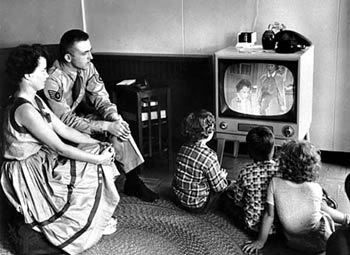
Television has also changed dramatically. TV has gone from a few channels on a tiny black and white screen with a very visible image scanning to extra large, high definition, satellite receiving monsters of tv's. At first TV was just a response to the popularity of radio, and was created to engage the audience with visual stimulation as opposed to radio's audio programming. However it also limited creators at first because the sets and cast were so limited once they were made visible. Now, this is no longer a problem with all the advancements made in CGI. However, television also seems to be losing many of its users because of other media such as computers. Users who used to sit at the TV and watch their favorite show in front of the TV set every Tuesday at 9 PM no longer do that. Websites such as Hulu.com allow people to watch the latest episodes whenever and wherever they want. People can watch their favorite movie or show on their computer, iPod, or any media that has access to the internet, for FREE. The user has made structured TV programming a problem of the past. At this point on Television, the audience is viewed as a commodity. Advertisers "buy" an audience based on the show airing at the time and what the projected age of the audience members will be. They then display products that are aimed at people in that age group. I believe that Hulu usage has gone up causing tests, such as Nielsen's census or samples, to be less and less accurate. Everything we need is on the internet, so why have a TV at all?

Radio has completely changed from the way it started out. We've come a very long way from the programming that aired at 5 minute intervals at the time of Mary Dyck. Mary's life on the farm was lonely- she stayed in the house and did housework while her husband worked in the fields all day. Her life became consumed with the characters on the radio shows. In her personal diary she wrote about the characters in a gossip-y manner that sounded like she believed she really knew them. This was common during this time, as Myerowits taught- the radio gave her access to situations she normally would never visit. It provided her escape to Hollywood, to the suburbs, etc. Mary formed parasocial relationships with the characters who because the emotional center of her life. This would never ever occur today. The radio has changed so much once it went from AM to FM. At first it was more progressive and broke the hunky-dory mold of AM radio at the time. People began making alternative styles of music and expressing their opinions as freely as the wanted to, common topics being drugs, concerts, and anti-War rallies going on. We've seen a drastic change to more mass produced radio stations after the seventies and the rise of Disco. Radio became more commercialized and more competitive. Corporate structure demanded playlists that appealed to the largest audience. Many of the alternative DJs left because they saw that radio was selling out. The day John Lennon died was a signal of the last time radio was that popular. People came together to mourn the loss of the music legend. Radio stations had people calling in who loved Lennon just throught their experience with his music that they heard on the radio. After MTV, radio became more focused less on talk and more on music, or as the saying went, "Shutup and play the hits!" There was a rise of Shock Jocks, such as Howard Stern, who would try to say the most offensive and shocking thinks to get people's attention and bring in listeners, lowering the bar for acceptable behavior. Music became more homogenized, spontaneity was lost by the science of getting the largest audience possible at once. Then radio moved to Satellite where people could choose the genre primarily and there would be at least one station for them to listen to. Then it moved to internet websites such as Pandora that allows the user to completely interract with their music experience. The enter a song, artist, or a genre that they like and the station uses the music genome to find other similar songs and artists to make up a playlist specifically for this user. The user can react whether they like the song or not and Pandora "learns" more about this user's taste and changes the playlist accordingly. I believe that this type of radio will stay around for a long time. People are always looking for new music to listen to and Pandora allows them to listen to their old favorites as well. This interactive version of Radio is so much more appealing to the user. The only way I can see it being unsuccessful is if it is no longer free, although there may be quite a few dedicated users who would be willing to pay for the service.

Wednesday, April 28, 2010

The Simpsons is known for being the longest running show on TV, which may baffle many of its viewers (myself included.) But once you approach the simple cartoon after reading Mittell's assessment, it becomes apparent why it has managed to survive so long. The Simpsons is more than just a cartoon. Unlike its predecessors The Simpsons manages to combine two genres in one- the family-style sitcom and the very pliable cartoon. Before this, cartoons such as the Donald Duck video we watched in class used the cartoon style to create episodes about violence and physical humor that would otherwise be unable to be depicted without the characters facing serious injuries. Changes to set, and appearance of characters are relatively easy to do in a cartoon as opposed to a sitcom with real, human actors and sets that had to be manually adapted. In this aspect, The Simpsons has a lot of freedom in regards to the way they could design the lifestyle of their characters.
The Simpsons also reflected many of the sitcoms that were on TV at the time of its origin. The Simpsons portrays an animated family of Marge, Homer, Bart, and Maggie, who face typical family issues (bad grades, making money, marriage) except in the exaggerated animated fashion. The siblings dont get along, the father is the typical "dumb dad" that was a common stereotype of family sitcom shows of the time. There always seems to be some kind of moral lesson learned during the episode that emphasizes the importance of family.
The reason they have stuck around so long is because of their ability to adapt to today's media. Every episode it seems that there is a reference to today's pop-culture.

Wednesday, April 21, 2010


I have never been big on horror films. As a child I felt I was too afraid of them and as I have gotten older I feel as though I can't really get as absorbed in them as most people seem to. I do not see the appeal to these slasher films and if I do happen to watch one, as soon as the film starts to get scary I think about how everyone is just acting and everything is fake. I'm not the kind of person that has nightmares after seeing a horror film either, my experience is just purely in the moment, unlike my sisters who were always left with bad dreams for weeks after the latest horror film. One movie that has always gotten to me though is Willow. I saw it as a child and many times since, but still retain that completely-scared-to-the-point-where-i-have-to-cover-my-eyes-and-hum feeling. Who knows if maybe the midgets creep me out to no end or if its just the freaky monsters and wolf-dogs, and goblin/monkey things. Even now as I search Google for "Willow monster trolls" and i come across other images from the movie a shiver runs down my spine. As a child, for some reason I would have horrible nightmares about wolves. When I saw this movie the one scene that sticks out to me the most is basically the opening scene when a bunch of black, vicious wolves attack the little peoples' village and one little girl is standing there separated from her mother and father, screaming crying. I was most afraid of this part because I felt that I could relate to it. Probably one of my worst fears is getting separated from my loved ones in a time of crisis so that's why that hit me so hard as a child and still remains with me to this day. I think that movie writers do try to make their films more and more shocking by appealing to what they understand to be the current trend of fear. As we face the war in Project Desert Storm, movies have involved more "Middle-East" looking characters as villains and more soldiers as protagonists. I'm pretty foggy on the trend fear during the 80's when Willow came out, but there was most likely a pattern of mythical creatures and gory (but simple by today's standards) CGI. Although I think that there will always be a rush for teenagers, mostly boys, to see the latest gruesome slasher murder movie; to find out the newest torture method or see every detail on those dismembered bodies. Movies are more and more graphic and to me, that's way more than I'd like to see.

Wednesday, April 14, 2010

The Beatles & Rockband

I would have to agree with Daniel Radosh about Rockband putting The Beatles to the forefront of the evolution of the music industry. As if these music video games aren't popular enough, add The Beatles to the mix and it becomes almost revolutionary. The Beatles themselves broke many records in the music industry because of their unprecedented popularity. Rockband has also broken records for the video game industry by beating out sports games for being the second most popular video game genre after the action genre. Once you add the world's most popular band you have a recipe for success. Not only does the interactive game appeal to younger people, but the epic popularity of The Beatles reaches out to an entirely new category of people who have never bought video games before but who are intrigued by the popularity and decide to make the purchase because of their history with, and affection for, The Beatles' music.
In the article they also mention the large amount of revenue received from users who decide to purchase music played in the game, through the Rockband music store. Here, Rockband charges $2 per song (twice as much as iTunes) and users can purchase new songs to add to their libraries and learn to "play" on their "instruments." Sales from these songs have been shown to reawaken an artist's popularity and jolt their sales as younger generations are exposed to older music. In this way, The Beatles; surviving members and widowers or those deceased will undoubtedly earn continuous royalties from this kind of airplay. It's a win-win situation for both parties (Rockband and The Beatles) because both have such a large fanbase, though in different age groups, that they help each other by bringing in more users while the other brings in more royalties.
While I do agree that this puts The Beatles at the forefront, I do think that it's Rockband making the evolution of music by creating different ways for users to reach their product.

Monday, March 22, 2010


Pandora Radio is a website that uses a method of classifying music by its components and their levels of intensity to produce a "radio" station that only plays music that the listener wants to hear. By providing some information about him or herself, the listener is able to have Pandora create a station that plays music similar to the kind that he or she has inputted into the system. When I created my own radio station, my first reaction was, of course, to put this system to the test. I chuckled to myself as I put Bob Dylan and Lil Wayne in the same category. Naturally, I was displeased with the result. With such little information about myself Pandora could not possibly create a mix or songs and artists that fell under the category of folk rap. However, when I actually created a list of similar artists and provided the proper feedback of whether or not I liked the song they chose to play for me, the result was refreshing. I am a huge fan of these kinds of websites for the exact same reason i liked Pandora- I was able to discover different music from different artists that I would normally never had heard of on my own. In my opinion Pandora should be (if it isn't already) an app for iPods and iPhones so that people can hear this music like a regular radio station without having to pay to buy each song like they do on iTunes. For me, my biggest gripe with new music is that I don't like to use illegal downloaders out of fear of them crashing my computer, but paying a dollar per song on iTunes is just out of the question. Pandora is a practical solution that also does all the work of finding new artists for me.
For Pandora to become a profit-making system they would maybe work like XM radio where people would pay to subscribe over a long period of time. Naturally, I think that Pandora is so great because it IS free, and if it were to charge money it would lose much of its appeal, not to mention its fan base. Perhaps being sponsored would serve as a better solution because it would keep the practicality for its users.

Monday, March 15, 2010

1. Given the definition of "disruptive innovations" given in the Geekipedia piece, do you agree with the author's argument that the iphone is a truly disruptive technology. Explain why you agree or disagree.
I think that the iPhone could definitely be considered disruptive technology. When it first came out I believe that Apple intended it to just be a portable computer that could make phone calls. But it blew up and became a way for people to constantly be in touch and checking their social networking sites and e-mails and get the answer to any question they have, from directions to a friends house to the price of a new book. The apps that have since come out since the iPhone's invention can do anything imaginable. I'm pretty sure that the iPhone creators at Apple had no intention of the iPhone being used to calculate the force of a punch, but it does, and it can. After seeing and learning how people use their iPhones, Apple can adapt how it works and make it more convenient for the user. I believe that is what makes a technology disruptive- it doesn't just perform the functions of multiple technologies- it creates new situations that society has never seen before and improves the way the product is used.
2. Assuming that Winston, the author of the hand-out "Storm in Paradise", would claim that the iphone is actually just evolutionary, not revolutionary, what evidence could you offer from the "Wired" article and the other items, to support his point of view?
The entire Wired article discusses exactly how the iPhone was revolutionary. It went from the iPod, solely playing music, to this touch screen music-player/phone-call-maker/ internet-access-er/ gps/ everything-you-ever-dreamed-of piece of equipment. There were many templates, mistakes, re-do's that lead to the device that we see today. It was its progress, evolutionary-speaking, that to the revolutionary effect it has had on the way people view their cell phones and the actions it should be able to perform.
3. What comment would Winston make about the new ipad, and do you think it will be seen as " disruptive technology", a game-changer, as many-though not all- of the technology critics have been saying?
My feelings on the iPad are mostly of confusion. It seems like an inconveniently large version of the iPod touch. The fact that it's just a screen seems like it would be a very fragile item to carry around while providing the same conveniences of a laptop. I don't see it as disruptive beause I don't see it as providing any kind of new uses that computers didn't formerly have. I guess it could be a game changer because it changes the way the user interacts with the screen itself. Perhaps thats the only real impact it will have on the computer world- it will be seen as a gamer's tool and, as Winston predicted with the message not being the purpose but rather the medium being the message, provide a new environment for gaming sitations and open the door to new possibilities. As someone who is not a gamer, this doesn't appear to affect my life in a way that will prove to be disruptive.

Monday, March 1, 2010

Reactions to Articles


In "Cell Phones, Texts, and Lovers" by David Brooks I read very many valid points about how technology and subsequently constant contact with one another has changed many things, but in this case the dating scene, drastically. People don't seem to be looking for commitment or a serious relationship anymore. In fact, as shown by the sex diaries, they barely seem to want any kind of non-sexual relationship with one another. They don't acknowledge their suitors by real names (ex. Stage 5 Clinger, The One Who Cries) which may just be a defense mechanism that prevents them from becoming too attached to someone who can, and will, leave them for a more enticing offer. The author quotes Wesley Yang when he says the diarists “use their cellphones to disaggregate, slice up, and repackage their emotional and physical needs, servicing each with a different partner, and hoping to come out ahead.” This is very apparent in my life where, as discussed in class, characters on reality shows such as The Jersey Shore are renowned for making plans with multiple people, only to ditch them for the seemingly best option. Separation of emotion from technology is pervasive in our society where people no longer play the dating game, but rather try to market themselves for instant gratification.

This does not mean that young people today are worse or shallower than young people in the past. It does mean they get less help. People once lived within a pattern of being, which educated the emotions, guided the temporary toward the permanent and linked everyday urges to higher things. The accumulated wisdom of the community steered couples as they tried to earn each other’s commitment.

Today there are fewer norms that guide in that way. Today’s technology seems to threaten the sort of recurring and stable reciprocity that is the building block of trust.

In "Defense of Distraction," Sam Anderson quotes Herbert A. Simon, who wrote “What information consumes is rather obvious: It consumes the attention of its recipients. Hence a wealth of information creates a poverty of attention, and a need to allocate that attention efficiently among the overabundance of information sources that might consume it.” I never knew there was a logical answer to why people could no longer focus as they used to. But after reading this i get the notion that it's one of those vicious circles- we have no attention because we have so much information which distracts our attention while we get more information which takes away more attention because we're accessing more information with less attention. Anderson's sense of humor is apparent throughout the article when she opens up naming all of the distractions that the reader is most likely involved in while reading the article. Later she goes on to describe how she conducted an entire interview with a man discussing the technological distractions of the 21st century, using social media. This is probably where I related the most to this article. I realized recently that I had lost a real connection with people I had always considered good friends. Great friends actually. We now communicate (barely) through text messages, facebook comments, and instant messages in the instant we catch a fleeting thought of each other. I saw something of my facebook feed that reminded me of one of my girlfriends- "just saw neil's profile picture, thought of you=)."

In "Digital Mistletoe" I have to admit I was a bit weirded out by the fact that someone could find a relationship with a practical stranger from facebook, as I always am by relationships that begin on the internet. It was an entertaining story though, cute. He reached out, she reached back, now they love each other. But I feel like that ability to reach out to a stranger or accept such an intimate friendship from someone met over the internet is not a quality I possess.

Monday, February 22, 2010

Digital Nation


i found this and thought it very much related to what we watched in class on thursday. The film we watched in class was a documentary about the extremes of technology and its effects on our culture and society. It was basically entirely focused on the effects of technology on the youth of today and how they differ from adults who grew up in an entirely different environment. It evoked questions from the viewer such as "Is it a bad thing to be constantly in touch with your peers?" "Are we getting dumber because we can't focus on any one thing for a long amount of time?" and "Is it dangerous use technology for extended periods of time?"

I felt very much like for adults who didn't grow up with technology at their fingertips, they found the concept of technology everywhere more disconcerting. But for today's youth who are growing up to be constantly on their phone, accessing the internet, talking to friends, doing schoolwork, pursuing interests, it is just their normal life. It's what they do on an everyday basis and has become the norm for them.

Most of the documentary showed studies of students and how they do their work. One study took students from Massachusetts Institute of Technology (known for its most technologically advanced students in the nation) who were hand-picked for their multitasking abilities and put them through a series of tests that measured if they were as good at multitasking as they thought they were. THe results were suprising to me because i could relate to those students who thought they were great at multitasking. I'm never focused on one media at once. If i'm on the computer, i'm on facebook looking at people's pictures, on iTunes listening to music, talking to my friends on instant messenger, texting, watching tv. Here i am thinking i'm doing a great job, just like those students. WHat the study showed was that the students reactions were significantly slower when multitasking and were more prone to wrong answers.

The study also stated some interesting statistics such as that kids spend 50+ hours a week with digital media- more han a full time job.
90% of kids use media and out of that 90%, 10-15% are at high risk for addiction to heavy gaming. THis is most obvious in South Korea where they have internet cafes for kids, or even adults, to pay for cheap internet service and play 24 hours a day. In one of these gaming places, one extreme incidence occurred where a teenager died because he played for 50 hours straight with no food or nutrition. Although it is probably the only case of this happening, or if not, a very VERY rare case, it has earned gamers a bad name with people who argue that gaming is a negative thing. South Korea has started setting up these Internet Rescue Camps where parents can send their kids if they feel their gaming affects their grades, or their health. AT these camps, the children aren't permitted to use computers for about a week. The organizers have the children participate in outdoor team activities in an effort to "recapture a childhood lost to the computer. "
Basically there are two opinions on technology- the good opinion, and the negative opinion.
The negative opinion basically says that students nowadays can't focus on any task for an extended period of time and aren't capable of the same level of work as former students who didn't have so much technology at their fingertips. Then you have those with positive outlooks on the influence of technology who say that shorter attention spans are the price of gain. It's the price we pay for a more advanced society, that students are smart, just not in the conventional topics that society holds so revered. The world has sped up so much from technology but the education system has not. We teach children to sit in their seats and be quiet, but in the future, no job will have there employees sit dopwn and be quiet.

I found this movie to be extremely interesting and brought up valid points for both sides of the Technology argument.

Friday, February 19, 2010

technology


The technology that i gave up for 4 days was tv. I pretty much regretted that immediately because i missed the opening ceremony of the Winter Olympics in Vancouver. Even though i knew i watched a significant amount of tv i didn't realize exactly how much until i had to pointedly not watch. One the positive side, giving up tv showed me how much free time i had and i was able to use it to finish the art projects that had accumulated so far. The first day i didn't watch tv was the easiest i would say, because it was new and i was excited to start the assignment. I always had work i could have been doing and i was able to accomplish a lot more than usual.

the second day i was still excited but found it a little tricky to stick to my conviction. The way my house is set up, the first floor is a wide open space with my kitchen having a full view of the tv in the living room. Unfortunately, just because i gave up tv for 4 days doesn't mean that my family did too. So whenever they watched tv i had to leave and be isolated in my bedroom. My boyfriend, Aaron had actually come down from school this weekend for valentine's day so i spent a lot of my time with him. This, of course, made things much easier. <3 One the third day, it was Valentine's Day and I really didn't have much of an issue with staying away from the tv. I had some family come over during the day so most of my morning consisted of getting together food. My mom was happy though because usually my sisters and I are very distracted by the television and she's constantly reminding us to clean off the table, vacuum, etc. Then that night we went out to dinner at a Chinese restaurant where there were no TV sets so there was no temptation there. Afterwards however I felt a little sorry for my boyfriend. We usually enjoy watching a movie or Law and Order SVU on tv, but since i had given up tv and couldn't watch, he couldn't either. But he was a good sport and we enjoyed playing a sort of trivia game as a way to keep ourselves entertained. The change of having someone to give up television with me was very nice and much welcomed. Final Day This was our vacation day and i was the most tempted on this day to watch tv. I always saw tv as a way to shut my brain off and just be entertained and relax so it was pretty hard for me to stay busy when i would ordinarily be relaxing. But on the other hand i also saw it as unproductive time where i could be doing something else and accomplishing things in this spare time. I saw this more during the past weekend because i did more things in a more timely manner and did accomplish more, as i always felt i would if i hadn't watched tv. Although i saw a difference in my daily work when i gave up tv, i was still excited to watch and cathch up on the shows i had missed. I also found that my boyfriend who is really into sports and watched the winter olympics every night was a little upset that i wasn't caught up. Even when i got to class the next day and everyone was talking about the opening ceremony and the sports i didn't know what they were discussing and i felt very much out of the loop. It was interesting to see that tv was something that so many people have in common and that was very much emphasized by something as popular as the Winter Olympics going on during the time i gave up television. Giving up TV was a difficult thing for me to give up because i felt like it kept me in touch with my peers and gave me time to shut down.

catching up

so after looking at some other blogs from the class i see that i have fallen way way behind in my posting.
My name's Amanda Letteri. I'm an Art Therapy major here at CW Post. I'm a commuter, which i consider a bummer- having to wake up that 30 mins earlier when i know that people who dorm are probably still sleeping gets to me. I have a really tight knit family consisting of my parents, my twin sister(fraternal) and my older sister. We've had my dog, Cocoa since i was in the second grade and we adopted a stray kitten about two years ago donned Edward (i though he should have been named Jacob..) . Right now I've got a pretty killer workload as an Art Foundations student who is also in the honors department. I have a boyfriend of almost one year (feb 28 coming up quick!!) who attends SUNY Albany. I work at a card store in plainview doing the cash register, stocking shelves, lotto machine, pretty much anything that needs to be done. My birthday is august 21st and I've always had a chip on my shoulder about not being able to celebrate my birthday with the class in elementary school haha.

Wednesday, February 17, 2010

Questions:


1. If Marshall MacLuhan were still alive , how would he respond to the description of the social implications of Facebook and Twitter described by Thompson?

if macluhan were still alive i believe that he would find the constant status updating intriguing; to know your friends whereabouts and what they were doing at any given moment would be a concept that he was completely unfamiliar with. However, i'm not sure if he would see it as a positive or negative use of technology. From his perspective as someone who avidly promotes the use of technology as a medium of communication it would appear to be a positive advancement. But to an advertiser it would appear differently. Every tweet or status update would be an opportunity to market some object or brand that a person used in their daily life. As a user posting your daily actions, each post is an opportunity to catch somebody's attention and get attention. Socially, twitter and facebook would just give users the idea that someone was always interested in what they are doing.

2. Would you agree or disagree with the claim that Meyrowitz's theory about social space pretty accurately predicts the social effects of these new social web applications? Explain your answer.


3. Describe an example from your own experience with these, or similar applications,that relates to this phenomenon of digital intimacy.
In my experience with status updating my opinion is that i can't be bothered to update my status all the time, i don't always want everyone to know what i am doing, and i enjoy my right to make private plans that other people don't have to read about or know about. If i don't even want to change my status then i doubt people really care to read what it is i am doing at the moment when i change my status. In the past i have gone someplace that another friend wasn't invited to and when she saw pictures that were posted and i was tagged in her feelings were hurt and she was offended that i didnt ask her to come along. In my opinion, situations like those have become more common with social networking sites because everyone is so eager to display an image of themselves as socially active people. This amplifies normal teenage dilemmas tenfold, i can't imagine what new problems i'll have to deal with as a parent in the future when who knows what kind of social networking will be available.

Friday, February 12, 2010

First Post

First post. More coming soon...